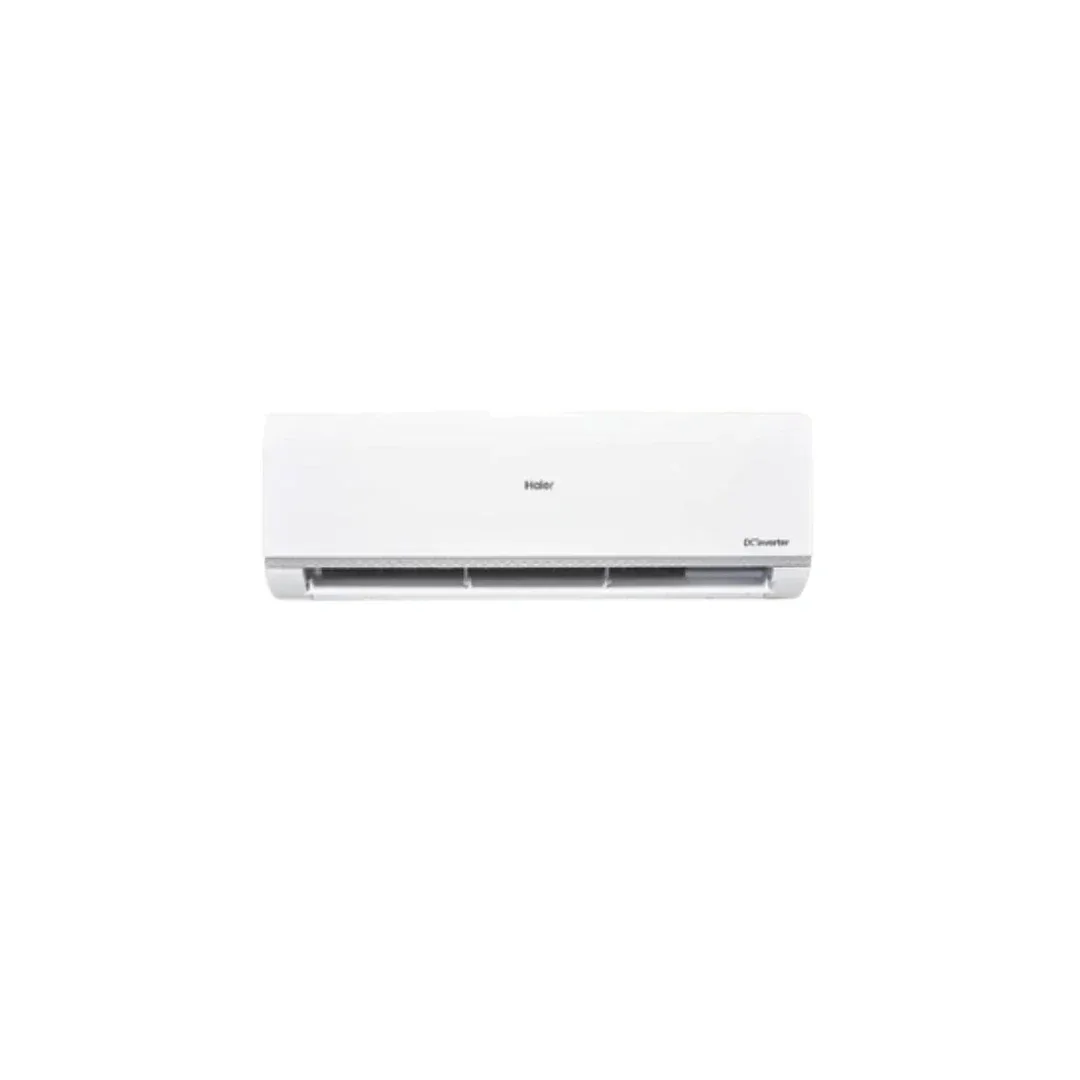
In most of Pakistan, picking an AC is not only about cooling — it is about whether it survives voltage swings, runs sensibly during load-shedding, and works with a UPS or solar setup. A DC inverter AC is the right choice here, but a few specifics make a big difference. This guide walks you through every decision, step by step.
Why an inverter AC for unstable power?
A DC inverter compressor speeds up and slows down smoothly instead of slamming on and off. That gives you three things that matter in Pakistan: a lower start-up surge (kinder to UPS, generators and solar), steadier running through voltage dips, and 30–50% lower electricity use than an old non-inverter unit. For solar specifically, read our AC on solar guide.
Step 1: Size the AC to the room
This is the single most important decision. Oversizing wastes money and short-cycles; undersizing means the AC runs flat-out and never quite cools.
| Ton | Room size | Typical use |
|---|---|---|
| 1 ton | Up to ~150 sq ft | Standard bedroom |
| 1.5 ton | Up to ~200 sq ft | Master bedroom / living room |
| 2 ton | ~250–350 sq ft | Hall / open-plan / shop |
Add capacity if the room is west-facing, has large windows, a high ceiling, or many people/appliances.
Step 2: Check the energy rating and T3 compressor
Higher efficiency labels cost a little more upfront but pay back over a long Pakistani summer. Look for a T3-rated compressor — it is designed to keep cooling efficiently even at extreme outdoor temperatures (up to ~52°C), which ordinary compressors struggle with. If the AC will run many hours a day, prioritise efficiency over a lower sticker price.
Step 3: Look for wide-voltage / solar-ready models
Pakistan's voltage fluctuates constantly. Choose a model rated for a wide input-voltage range so it keeps running during dips and is gentler on your backup. If you have or plan solar, pick a unit marketed as solar-compatible. Pair any AC with a good stabiliser unless it already has wide-voltage protection built in.
Step 4: Copper vs aluminium, and build quality
Prefer copper condenser coils where possible — they transfer heat better and are easier to repair than all-aluminium coils. Also check for anti-corrosion coating on the outdoor unit (useful in humid coastal cities like Karachi).
Step 5: Features worth paying for (and skipping)
- Worth it: good warranty, T3 compressor, turbo/fast-cool mode, sleep mode, auto-restart after power returns.
- Nice to have: Wi-Fi/app control, air filters.
- Don't overpay for: gimmicky modes you will never use.
Step 6: Budget tiers (2026)
Real starting points from our catalogue:
- Value (Rs 106,000–125,000): Dawlance Aeromax/Sprinter, Haier Marvel, entry Gree — solid 1-ton inverters.
- Mid (Rs 150,000–200,000): 1.5-ton inverters with better efficiency and features.
- Premium (Rs 200,000+): 2-ton and flagship models for halls.
See current prices on the split AC range and the full inverter AC price guide.
Step 7: Don't skip professional installation
Even the best AC underperforms with a poor install — wrong pipe length, low gas, or a badly placed outdoor unit. Insist on proper installation and keep your warranty card. If a new AC cools weakly, installation is the usual suspect — see our AC not cooling guide.
Your quick buying checklist
- ☐ Right ton for the room size
- ☐ DC inverter + T3 compressor
- ☐ Good energy rating
- ☐ Wide-voltage / solar-ready (+ stabiliser if needed)
- ☐ Copper coil + anti-corrosion outdoor unit
- ☐ Multi-year compressor warranty
- ☐ Seller arranges installation + honours warranty
A worked sizing example
Say your bedroom is 12 ft × 14 ft = 168 sq ft, faces west, and gets afternoon sun. The base recommendation (~150 sq ft for a 1-ton) is slightly exceeded, and the west sun adds heat load — so a 1.5-ton inverter is the safer, more comfortable choice here. For a shaded 10 ft × 12 ft (120 sq ft) room, a 1-ton is perfect and cheaper to buy and run. When a room is on the borderline, size up rather than down — an undersized AC running flat-out costs more and lasts less.
Inverter vs non-inverter: the bill difference
A non-inverter AC's compressor is either fully on or fully off, spiking power each time it restarts. A DC inverter varies compressor speed to hold the set temperature, so it sips power once the room is cool. In practice that's roughly a 30–50% lower electricity bill for the same cooling — which usually recovers the inverter's higher purchase price within one to two summers of regular use.
A quick word on refrigerant
Most modern inverter ACs in Pakistan use R410A or the newer, more eco-friendly R32 gas. R32 is slightly more efficient and easier to service. It's not a dealbreaker either way, but if two models are otherwise equal, R32 is the marginally better pick.
Understanding tonnage and BTU
"Ton" measures cooling capacity, not weight. One ton equals roughly 12,000 BTU/hour of cooling. So a 1-ton AC ≈ 12,000 BTU, 1.5-ton ≈ 18,000 BTU (you'll see "18K" in model names like the PEL 18K), and 2-ton ≈ 24,000 BTU (the "24" in HSU-24 models). You don't need to do the maths yourself — just match the ton to your room using the table above — but it helps to recognise these numbers when comparing models.
Stabiliser vs built-in wide-voltage protection
Many newer inverter ACs include wide-voltage operation, meaning they keep running through Pakistan's voltage dips without an external stabiliser. Check the spec sheet: if the model states a wide input range (roughly 150–260V), you may not need a separate stabiliser. If it doesn't, budget for a good stabiliser sized to your AC — it protects the compressor and is far cheaper than a repair.
Noise levels — what counts as quiet?
For a bedroom, aim for an indoor unit around the low-to-mid 20s in decibels on its quiet or sleep mode. Inverter units are naturally quieter than non-inverter ones because the compressor seldom runs flat out. If a peaceful night's sleep matters, check the quoted indoor dB rating before buying.
Lifespan and maintenance
A well-installed, well-maintained inverter AC commonly lasts 8–12 years. The two biggest factors are a clean system (wash filters every 2–3 weeks in summer, service annually) and stable voltage. Neglect — clogged filters, a dirty outdoor coil, voltage spikes — is what kills compressors early. A few minutes of care each month genuinely extends the life of the unit.
What to check on delivery and installation
- Confirm the model and ton match what you ordered, and the box is sealed.
- Keep the warranty card and invoice safe.
- Insist on professional installation — correct pipe length, proper gas pressure, a firmly mounted, well-ventilated outdoor unit.
- Test cooling before the installer leaves: it should blow cold within minutes on Cool mode.
Where to place the indoor and outdoor units
Placement affects both cooling and bills. Mount the indoor unit high on a wall, away from direct sunlight, with clear space so air circulates across the whole room — not blowing straight into a wall or curtain. Put the outdoor unit in a shaded, well-ventilated spot with at least a foot of clearance around it; never box it into a tight, hot corner, as trapped heat makes it work harder and cool less. Keep the pipe run between the two as short and direct as practical.
Reading the energy-efficiency label
You'll see efficiency expressed as energy-rating stars and figures like EER or CSPF (cooling seasonal performance factor). Higher numbers mean more cooling per unit of electricity. A T3 compressor plus a high CSPF is the combination you want for Pakistan's heat — it holds efficiency at extreme outdoor temperatures, which is exactly when a cheaper unit's running cost balloons. Over a full summer, the efficient model is usually the cheaper one to own.
Split AC vs other types
For Pakistani homes, a split inverter AC is almost always the right choice — quiet indoor unit, efficient, and good for bedrooms and lounges. Floor-standing (cabinet) ACs suit large halls and commercial spaces where you need powerful cooling from a single unit. Window ACs are cheaper and simpler but louder and less efficient — a fading option now that inverter splits are affordable. Unless you have a specific reason, a right-sized split inverter is the smart default.
Frequently asked questions
Can an inverter AC run on a normal home UPS? A typical small UPS cannot run an AC for long; inverter ACs are far easier on solar/generator setups — size your backup correctly.
Which ton is most efficient? The one that matches your room. A right-sized 1.5 ton beats an oversized 2 ton on bills.
Is a T3 compressor worth it in Pakistan? Yes — it holds efficiency in extreme heat, exactly when you need cooling most.
Which brand should I pick? See our Gree vs Haier vs Dawlance comparison for Gree vs Haier vs Dawlance.
Can I run it on solar? Yes — our AC on solar guide covers panel and battery sizing.
Do you deliver and offer cash on delivery? Yes — cash on delivery with delivery across Rawalpindi & Islamabad and shipping nationwide.