When an AC is out of budget or you need cooling where there's no AC point, a room air cooler is the practical Pakistani answer — affordable to buy, cheap to run, and effective in our dry summer heat. But coolers vary a lot, and the wrong one just blows warm, damp air. Here's how to choose well.
How an air cooler actually works
A cooler pulls warm air through water-soaked pads; as the water evaporates it cools the air, which a fan then pushes into the room. This is why coolers work brilliantly in dry heat (Punjab, interior Sindh, KP in peak summer) and less well in humid coastal air (Karachi monsoon), where the air can't absorb much more moisture. Knowing your climate is the first step.
Tank size — match it to your usage
The water tank decides how long the cooler runs before a refill.
| Tank size | Best for |
|---|---|
| Up to ~25 litres | Small rooms, short sessions |
| ~30–50 litres | Bedrooms / lounges, half-day running |
| 60+ litres | Large rooms, all-day cooling, fewer refills |
A bigger tank means fewer top-ups but a heavier, larger unit — balance it against your room and how often you want to refill.
Cooling pads: honeycomb vs wood wool
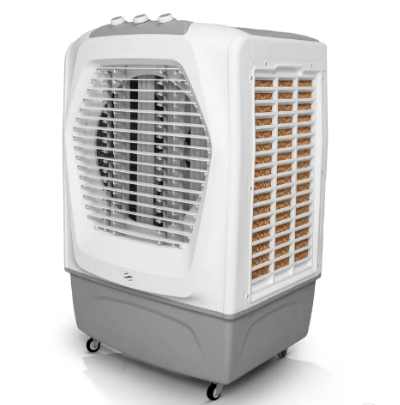
The pads are where the cooling happens. Honeycomb pads are the modern standard — more surface area, better cooling, longer life, often with anti-bacterial treatment. Older wood-wool (grass) pads are cheaper but cool less and need more frequent replacement. For better, cleaner cooling, choose a cooler with three-side honeycomb pads.
Air throw and fan power
"Air throw" is how far the cooled air reaches. For a large room or a high-ceilinged space, look for strong air throw and a powerful fan, ideally with an auto-swing louvre for even distribution. A cooler with weak air throw will only cool the area right in front of it.
Motor: copper winding and energy use
A good cooler uses an energy-efficient motor — many now advertise copper-winding or inverter motors that draw less power and last longer. Coolers are already cheap to run compared to an AC (a fraction of the electricity), and an efficient motor plus the ability to run on UPS or a small solar setup makes them ideal during load-shedding.
Body material and build
Most modern coolers use shock- and rust-proof plastic bodies, which are light, durable and don't corrode like older metal ones. Look for sturdy castor wheels (so you can move it room to room), a stable base, and a build that won't rattle at high fan speed.
Handy features worth having
- Ice packs / ice chamber — drop in frozen packs for an extra cooling boost on the hottest afternoons.
- Top-loading water inlet — easy refilling without bending or spilling.
- Water-level indicator — so you know when to refill.
- Auto-swing & multiple fan speeds — for even, adjustable cooling.
- Remote control — convenient on higher models.
Air cooler vs AC — which makes sense?
A cooler costs a fraction of an AC to buy and run, needs no installation, and works during load-shedding on minimal power — but it cools less in extreme or humid conditions and adds moisture to the air. An AC cools more powerfully and works in any humidity but costs far more upfront and in electricity. Many Pakistani homes use both: AC for the hottest rooms, coolers elsewhere. If you're weighing an AC, see our inverter AC buying guide.
Best models and prices (2026)
At Inspire Home Store, room air coolers start around Rs 20,000 — for example the Inspire SN-1111 (~Rs 20,000) and SN-1010 (~Rs 25,000), ranging up to about Rs 36,500 for larger units. Browse the full live range on the room air coolers page and the Inspire brand page.
Care and maintenance
Empty and rinse the tank regularly to stop algae and smells, clean or replace pads each season, and run the pump only with water in the tank. Drain it before storing for winter. A clean cooler cools better and lasts for years.
How much electricity does a cooler use?
This is the cooler's biggest selling point. A room air cooler typically draws a small fraction of what an AC uses — often comparable to a couple of fans plus a small water pump. That means a tiny electricity bill and easy running on a UPS or small solar setup during load-shedding. For families watching costs, a cooler can keep a room comfortable through summer for a fraction of an AC's running cost — which is exactly why coolers remain so popular across Pakistan.
Cooler vs pedestal fan vs AC
A pedestal fan only moves air — it doesn't lower the temperature — so in peak heat it just blows warm air. A cooler actually drops the air temperature through evaporation and costs far less than an AC to buy and run, but works best in dry heat and adds humidity. An AC cools powerfully in any conditions but costs the most upfront and on the bill. For dry-climate homes on a budget, a cooler is the sweet spot between a fan and an AC; in extreme or humid conditions, an AC wins. Many homes sensibly use a mix.
Where to place a cooler for best results
Air coolers need fresh, dry air to work — unlike an AC, they perform best with a window or door slightly open so humid air can escape and dry air comes in. Place the cooler near an opening, point it across the room toward where people sit, and don't seal the room completely (a closed room makes a cooler's output damp and less effective). This single tip makes a big difference to how cool the room feels.
Tips for maximum cooling
- Use the ice chamber/ice packs on the hottest afternoons.
- Keep a window cracked so moist air escapes.
- Refill before the tank runs dry so the pads stay soaked.
- Clean or replace honeycomb pads each season for full airflow.
- Position it in the path of incoming fresh air, not in a sealed corner.
Common cooler problems and fixes
- Blowing warm/damp air: room is sealed (open a window) or pads are dry/dirty.
- Weak cooling: worn pads, low water, or a humid day.
- Smell from the cooler: stagnant tank water — empty, rinse and refill.
- Water not reaching pads: clogged pump or distributor — clean it.
What size cooler for your room?
Beyond the tank, match the cooler's airflow capacity to the space. A small personal or room cooler suits a bedroom or study; a larger cooler with strong air throw and a 50–60+ litre tank is better for a big lounge, drawing room or a semi-open veranda. For very large or commercial spaces, you may need more than one unit or a heavy-duty cooler. As a rule, it's better to slightly over-size the cooler than to put a small unit in a big room where it can't keep up — an underpowered cooler in a large space just won't cool noticeably.
Safety and practical tips
Coolers mix water and electricity, so a little care matters: plug into a properly earthed socket, never touch the unit with wet hands while it's running, keep the cord away from the water tank, and switch it off before refilling or cleaning. Position it where spills won't reach electrical points, and use a stabiliser-protected socket if your voltage swings. With sensible handling, a cooler is perfectly safe and will serve you reliably through many summers.
The bottom line
For dry-climate Pakistani homes on a budget, a room air cooler is one of the best-value ways to stay comfortable in summer — cheap to buy, cheap to run, and easy on backup power during load-shedding. Choose a tank size that matches how long you want it to run, insist on three-side honeycomb pads and strong air throw, pick a sturdy plastic body with an ice chamber, and place it where fresh air can flow. Do that, and you'll get genuine cooling for a fraction of an AC's cost.
Frequently asked questions
Do air coolers work in Pakistan's heat? Yes, very well in dry heat (most of Punjab, interior Sindh, KP); less effectively in humid coastal air like Karachi's monsoon.
What tank size should I choose? 30–50 litres suits most bedrooms and lounges; 60+ litres for large rooms or all-day cooling.
Are honeycomb pads better? Yes — they cool better, last longer and are cleaner than old wood-wool pads.
Can a cooler run during load-shedding? Yes — coolers use little power and run easily on a UPS or small solar setup.
Air cooler or AC? Cooler for affordability and dry climates; AC for powerful cooling in any humidity. Many homes use both.
How much does a room air cooler cost? From around Rs 20,000 up to ~Rs 36,500 depending on size and features.
Do ice packs help? Yes — frozen packs in the ice chamber give a noticeable extra cooling boost on the hottest days.
Do you deliver with cash on delivery? Yes — across Rawalpindi & Islamabad and nationwide.